Discover the best time to see the Milky Way in South Africa. Learn when, where and how to experience our galaxy under the dark skies of the Klein Karoo with Night Sky Tours.
Witness One of Nature’s Greatest Spectacles
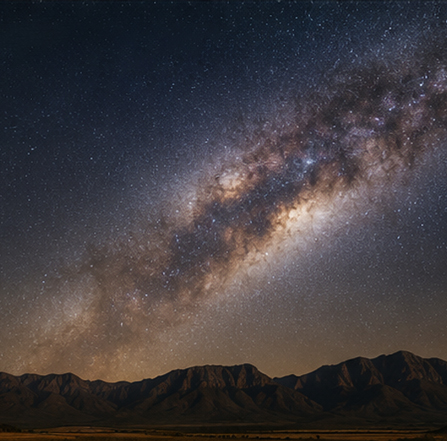
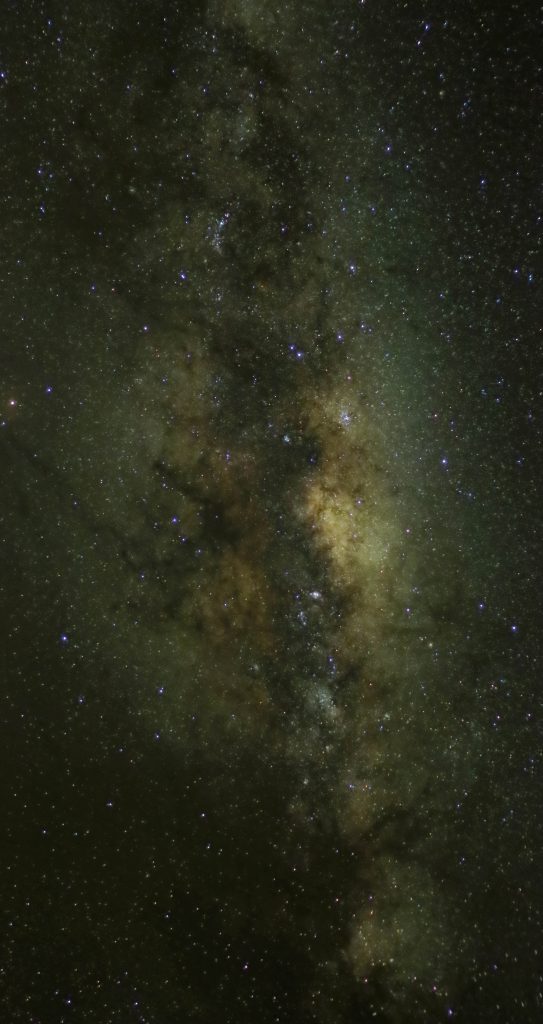
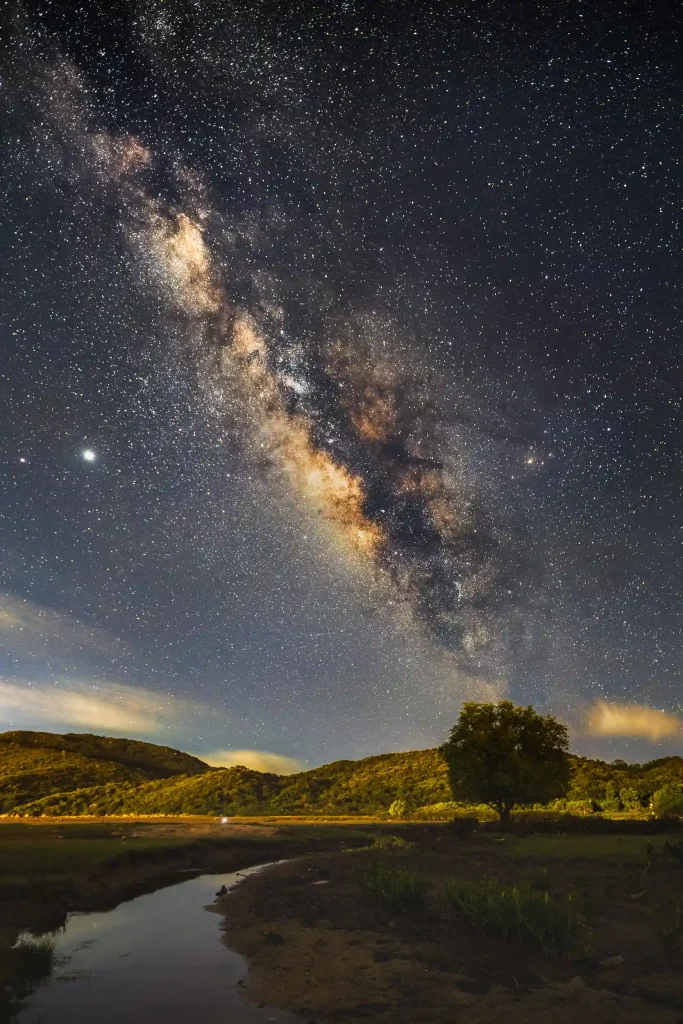
Few sights on Earth are as breathtaking as standing beneath a sky where the Milky Way stretches from horizon to horizon. From dark locations in South Africa, our galaxy appears as a luminous river of countless stars, dust clouds and glowing nebulae arching overhead.
For many visitors, seeing the Milky Way with their own eyes is a lifelong dream.
The good news is that South Africa—particularly the Klein Karoo—offers some of the finest viewing conditions in the Southern Hemisphere.
Whether you’re planning your first astronomy adventure or looking for the perfect time to photograph the night sky, this guide explains when, where and how to experience the Milky Way at its very best.
What Is the Milky Way?
The Milky Way is the galaxy that contains our Solar System.
It is an enormous spiral galaxy estimated to contain hundreds of billions of stars, along with vast clouds of gas, dust and countless planetary systems.
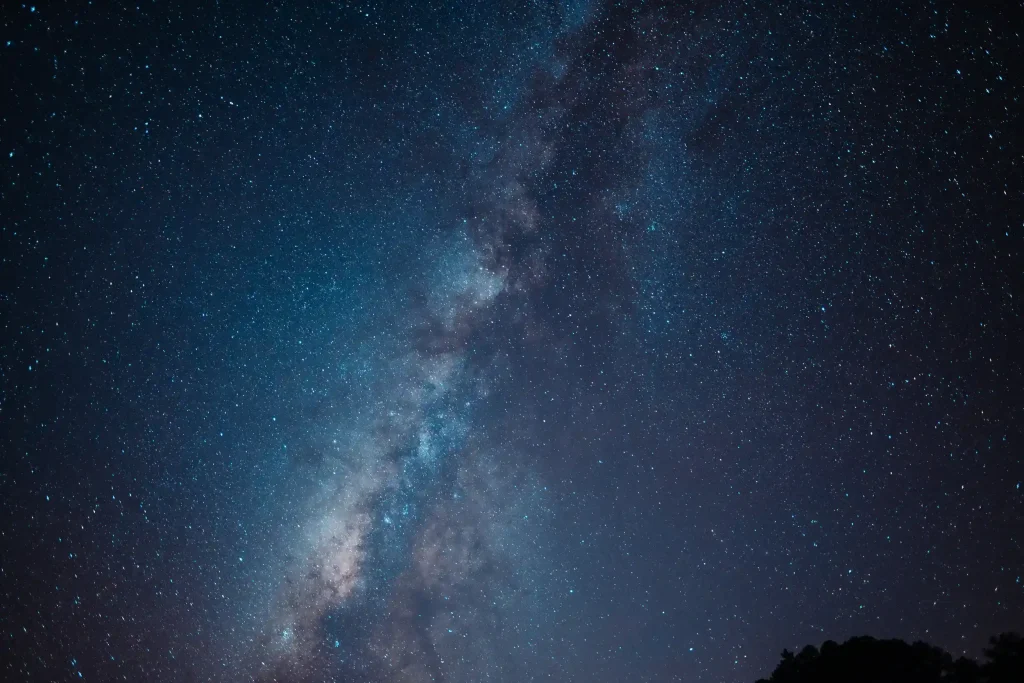
When you look up on a dark night, the pale band stretching across the sky is not a cloud. It is the combined light of billions of distant stars viewed from within our own galaxy.
Because we live inside the Milky Way, we see it edge-on, giving it the appearance of a glowing band across the heavens.
When?
the Best Time to See the Milky Way
February to October
This is generally the best period to observe the brighter sections of the Milky Way after sunset.
As the months progress, the galactic core becomes more prominent during the evening.
May to August – Peak Milky Way Season
For photographers and visual observers alike, winter provides the most spectacular views.
During this period:
The galactic centre is visible.
Nights are longer.
Humidity is lower.
Atmospheric stability.
September and October
The Milky Way gradually shifts across the sky earlier in the evening, remaining an excellent target before setting later at night.
November to January
The galaxy remains visible, but the brightest central region appears later in the night or early morning, making it less convenient for casual observers.
The Importance of Moonlight
The darker the sky the better the view
One of the biggest factors affecting Milky Way visibility is the Moon.
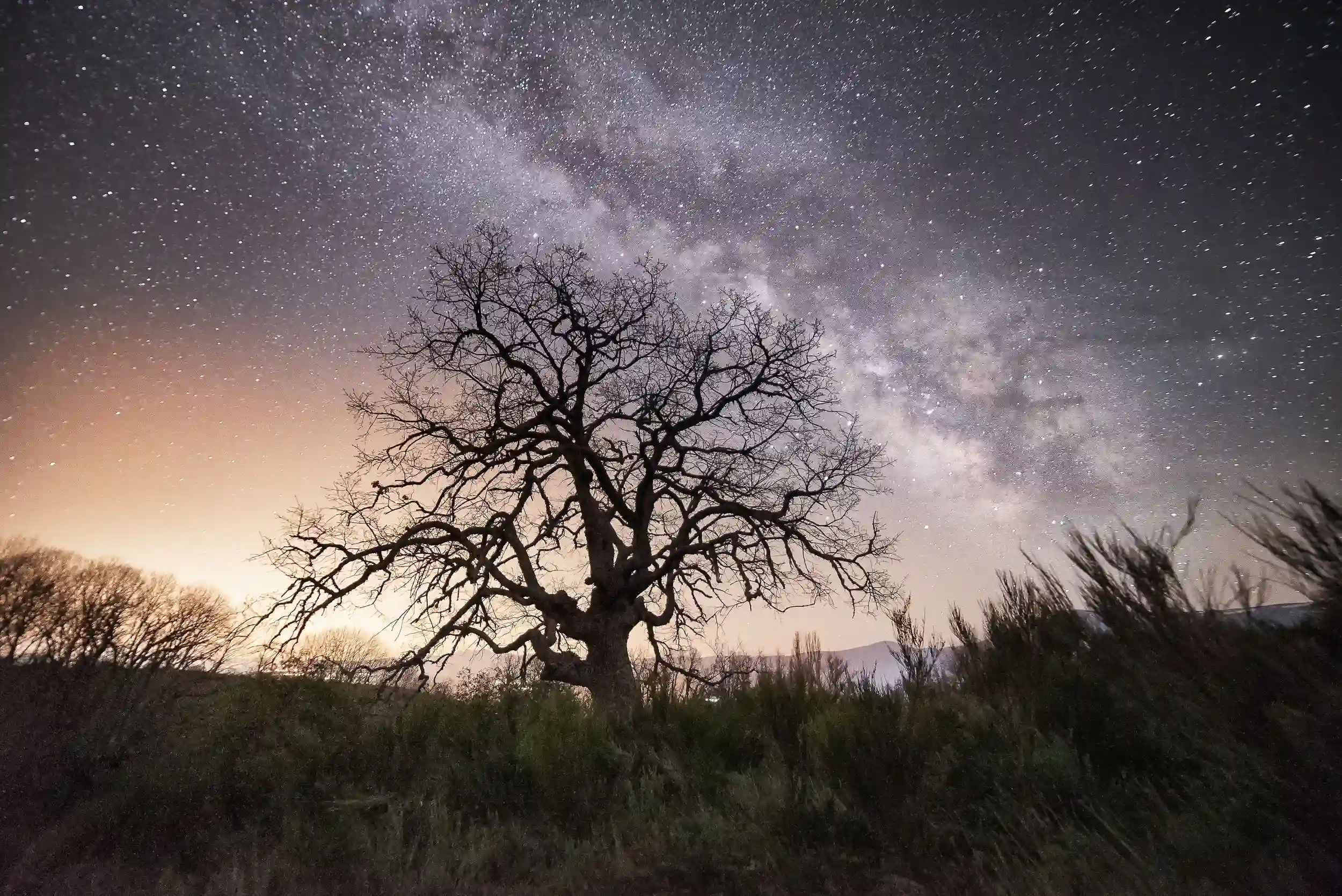
A bright Full Moon can wash out many of the faint stars that make the Milky Way so spectacular.
For the best experience:
Plan your visit within a few days of the New Moon.
Avoid nights close to the Full Moon if your main goal is viewing or photographing the galaxy.
Even a First or Last Quarter Moon can brighten the sky enough to reduce contrast.
This is why Night Sky Tours carefully considers lunar phases when planning experiences that focus on the Milky Way.
Minimal Light Pollution
Dry Climate
Frequent Clear Nights
Open Horizons
Peace and Quiet
Hidden Within
What Can You See Within the milky way
Many people are surprised by how much structure becomes visible under truly dark skies.
Through the naked eye, binoculars or telescopes, you may observe:
Dark Dust Lanes
These appear as dramatic dark ribbons weaving through the brighter parts of the galaxy.
Star Clouds
Dense concentrations of stars create brilliant glowing regions.
Nebulae
Massive clouds of gas where new stars are born.
Popular examples visible from South Africa include:
Lagoon Nebula (M8)
Trifid Nebula (M20)
Omega Nebula (M17)
Eagle Nebula (M16)
These come into great view using our Seestar S30 Pro telescope stacking the images together.
Star Clusters
Open clusters such as the Butterfly Cluster and globular clusters like Omega Centauri add remarkable detail to the Milky Way region.
FAQs
Popular Questions
Ready to explore the Milky Way with us? Here is some questions regardng when where and how to seen the milky way
Several regions offer excellent dark skies, but the Klein Karoo is among the finest thanks to its dry climate, low light pollution and wide-open landscapes.